

Autistic spectrum disorder (ASD) is a neurological and developmental condition caused by differences in the brain. This condition affects how a person interacts with others and how he behaves in society. ASD also may cause problems with studying and working (or even finding a job). Autism can be diagnosed at any age, although symptoms usually appear before age 3.
Autism symptoms in adults are quite similar to those in children. The biggest difference is visibility. Many adults with ASD may have learned to suppress their autistic behaviors and characteristics. This strategy is known as masking. In particular cases it can lead to stress, anxiety, depression, and other negative consequences. But some high-functioning autistic adults have good coping mechanisms, which help them fully integrate into social life.
What do we mean by the term “high-functioning autism”?
People with ASD have a wide range of strengths, needs, abilities, and challenges. Some of them have a normal or even high IQ and are able to work and live independently. This type of ASD we can call high-functioning autism.
“High-functioning autism” isn’t an official medical term or diagnosis. We use this term to specify the ability of a person with ASD to speak, read, write, and handle basic life skills. In other words, we just define severance of condition.
High-functioning autism or Asperger’s syndrome
Many of you surely hear about Asperger’s syndrome. For example, Sheldon Cooper in the famous TV show “The Big Bang Theory” is a great illustration of Asperger’s syndrome. He is just an exaggerated character, but many people started to recognize symptoms and signs of Asperger’s syndrome through him.
In fact, high-functioning autism and Asperger’s syndrome are the same. Both are usual terms for describing the same part of the autistic spectrum disorder. Most high-functional autistic adults are integrated into society. They can get an education and a job; they can have long-term relationships, family, and friends. But even a highly integrated adult with high-functioning autism is struggling with constant stress and has trouble with being in a neurotypical (“normal”) environment.
Main signs and symptoms of high-functioning autism in adults
Most adults with high-functioning autism have some of these common symptoms:
| Symptom | Description |
| lack of social skills | They mostly have difficulties with making eye contact or dealing with long conversations. They can’t recognize sarcasm or understand intonations, etc. |
| high emotional sensitivity and intensity | In some cases high-functioning autistic adults can’t deal with their own emotions. They can feel anger, fear, or other emotions in circumstances that don’t cause such emotions in neurotypical people. Intensity of emotions also can feel unbearable. |
| sensory hypersensitivity | Some high-functioning autistic people have severe reactions to physical contact, bright light, or noises. |
| strong interest or even fixation in specific things | Multifunctioning isn’t about people with ASD, even when they are high-functioning. But ASD helps to focus on details. So, many adults with this disorder can be successful in particular spheres of activity (arts, math, programming, etc.). |
| attachment to routines and restrictive habits | Routines and restrictive habits help them feel control and cope. Even a little change can cause severe emotions and ruin the stability of a person. |
It is impossible to make a full list of symptoms because they can be different depending on the person and his environment. We just described the most common signs.
Challenges of diagnosis
It is hard to get an ASD diagnosis as an adult, especially if we talk about the high-functioning level.
Main challenges:
- masked symptoms;
- lack of diagnostic methods;
- cost;
- time.
Benefits of diagnosis
If you recognize signs of ASD in yourself, getting a diagnosis get give you some benefits:
- access to services (insurance for therapy);
- work protection;
- access to community (specific social groups or support groups for people with ASD);
- better understanding of your condition;
- self-acceptance;
- access to proper treatment.
When do you need to see a doctor?
Some adults with high-functioning autism don’t need treatment. Diagnosis can help to understand the condition and learn to cope. Sometimes there can be a huge need for support or even medications. High-functioning autism is a very specific condition that is based on the person and his or her environment. So, we can’t give general advice for everyone.
You should see a doctor or psychologist if you struggle with your condition and you can’t handle it by yourself. Here are the most common signs of needing help:
- You can’t properly relate to society.
- You can’t go through job interviews.
- You are struggling with the psychological consequences of divorce or loss.
- You are in continuing stress.
- You have depression or severe OCD (obsessive-compulsive disorder).
This is not a full list and can’t be. If you are not feeling well or you can’t reach your needs, it is enough reason to seek support or treatment.
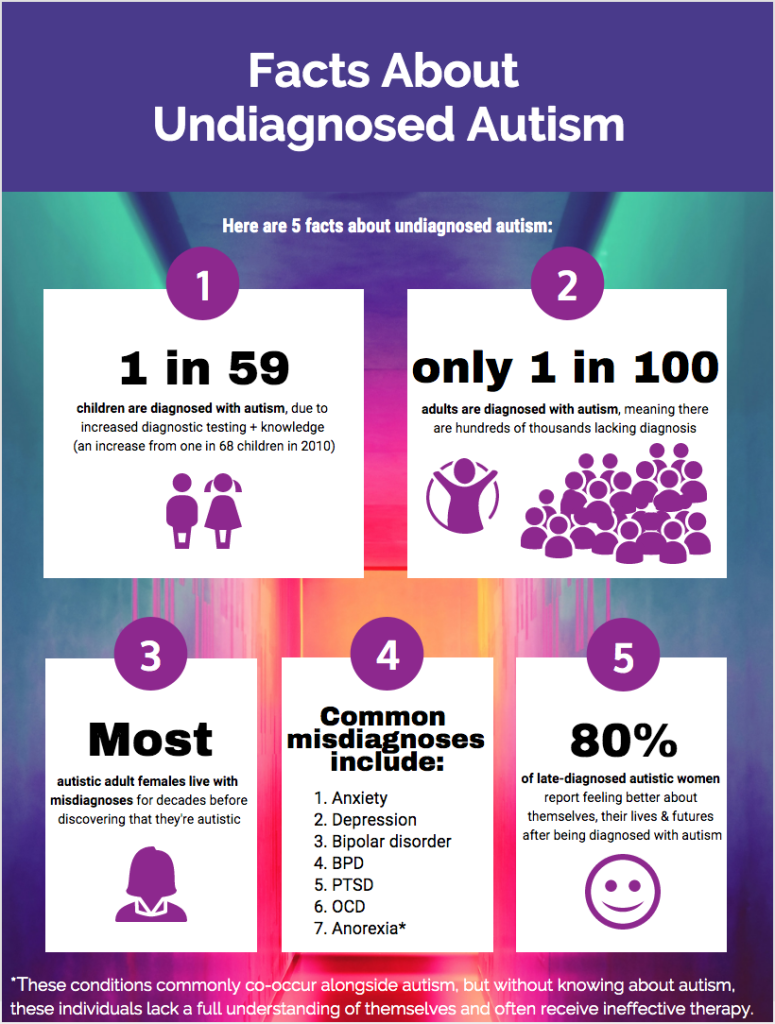
Image source: other-autism.com
Which specialists can help?
If you or your loved ones struggle with symptoms of high-functioning autism, you can call your primary care physician. If needed, you may be referred to specialists, such as:
- psychologist (neuropsychologist);
- neurologist;
- psychiatrist
This condition is often treated with a team approach. In most cases there is a need to see more than one doctor for ASD care.
How to relate with a person with high-functioning autism?
Most adults with high-functioning autism have mild or masked symptoms, which help them to integrate into society. That doesn’t mean they are not struggling with various challenges. So, if you are aware that a person has high-functioning autism, you should try to be more empathetic and conscious with him or her.
Remember that they can properly communicate and do their jobs but in their own way. Sometimes they may need support; sometimes it will be enough to let them handle things by themselves. Don’t try to hug them without permission, and give them space.
Also be aware that the need for treatment or support is something that depends only on the person. High-functioning autism isn’t a disease in the common way and doesn’t always require treatment. In many cases symptoms of high-functioning ASD can be main characteristics of identity which can’t be changed or treated.
Sources:
Harvard Health Publishing
Mayo Clinic
NHS
MedicalNewsToday
WebMD