What is acne?
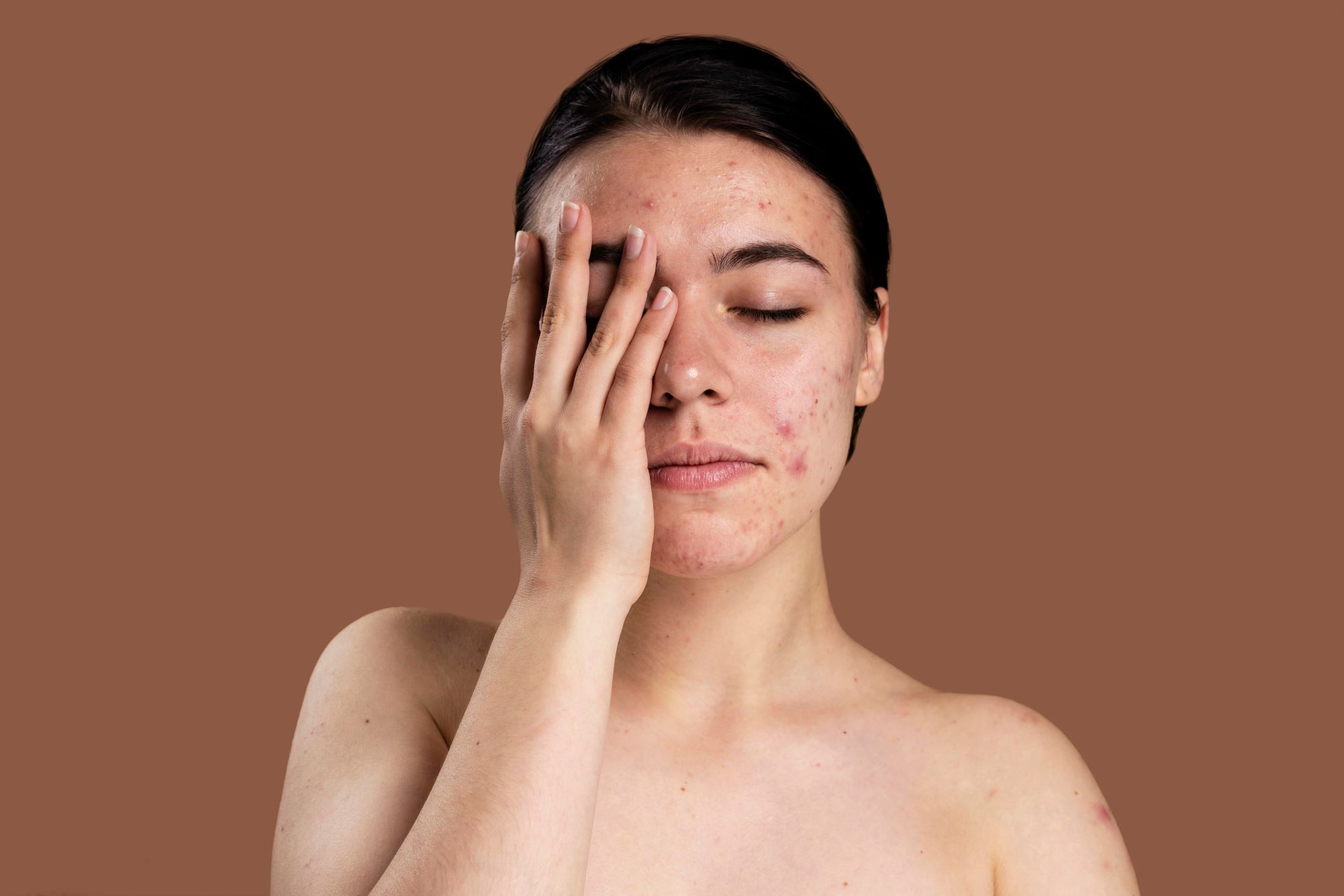
Acne is a skin condition that causes whiteheads, blackheads and pimples. The medical term for acne is acne vulgaris. Acne is the most common skin condition in the United States, affecting approximately 85% of adolescents.
Who does acne affect?
Acne can affect everyone. But it’s more common in teenagers and young adults. It’s because of hormonal changes related to puberty. Usually acne tends to resolve between ages 30 and 40. Among adolescents, acne is more prevalent in males. Post-adolescent acne is more common among females.
Some factors increase the likelihood of getting acne. Here are some of them:
- hormonal changes (puberty, pregnancy)
- underlying medical problem (e.g., polycystic ovary syndrome, obesity)
- positive family history of acne
- oily substances (e.g., lotions, cosmetic products)
- continuous skin trauma (e.g., pressure caused by helmets or tight collars, skin scrubbing)
- The role of diet in acne formation is not fully explained yet.
How does acne develop?
The main cause of acne is clogged hair follicles or pores. Follicles are pits in your skin that hold a strand of your hair. Normally, several processes take place on our skin:
- Sebaceous glands produce sebum (oil) that protects our skin.
- Old skin cells die and shed to make room for new ones.
- Some bacteria (Cutibacterium acnes) live on our skin.
In brief, the above-mentioned processes are altered, leading to acne formation. An increased amount of oil substances and overabundance of normal skin cells block hair follicles. Increased sebum production also enhances bacterial growth. As a result, pores became inflamed and ruptured, leading to pimple formation.
Where does acne appear?
Acne usually appears in body areas where you have the most sebaceous glands. As a rule, acne appears on the face, forehead, neck, chest, upper back and upper arms.
What are the symptoms of acne?
Signs and symptoms of acne include:
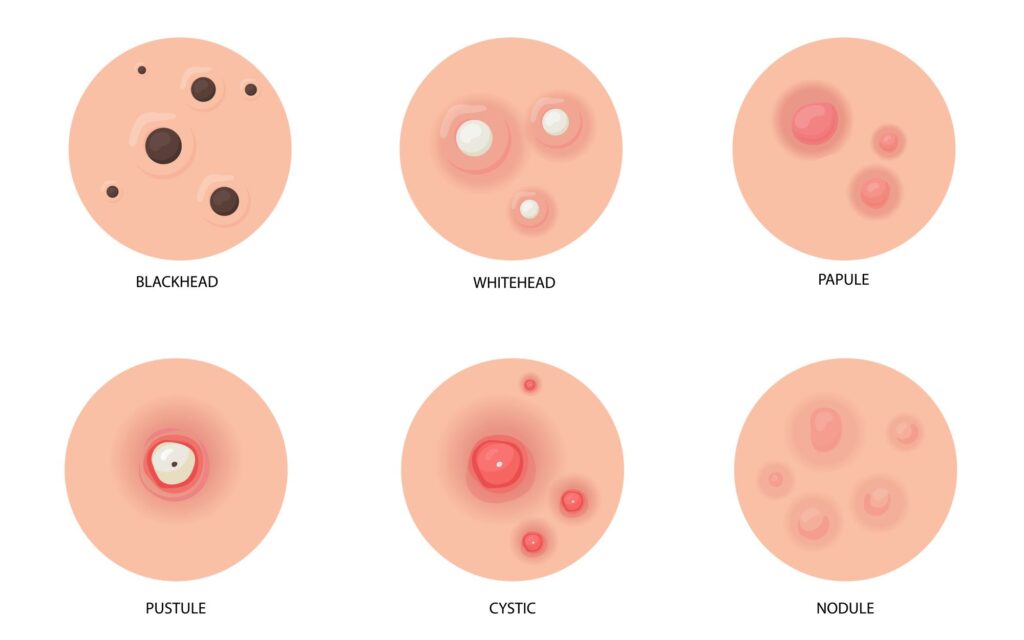
- papules – small, discoloured or red, tender bumps
- pustules (pimples) – papules filled with pus
- blackheads – plugged pores with black tops
- whiteheads – plugged pores with white tops
- nodules – large painful lumps under your skin
- cysts – painful pus-filled lesions under your skin
How severe can acne get?
There are four grades of acne staged by severity:
Mild (Grade 1) – predominantly whiteheads and blackheads with few papules and pustules
Moderate or pustular acne (Grade 2) – several papules or pustules on your face
Moderately severe or nodulocystic acne (Grade 3) – numerous papules and pustules and some inflamed nodules on your face, back and chest
Severe nodulocystic acne (Grade 4) – numerous nodules and inflamed pustules
Sometimes, you can develop acne complications, e.g., scars and skin colour changes: skin may become darker (hyperpigmentation) or lighter (hypopigmentation).
Can I treat my own acne?
If you have mild acne, you can try to treat yourself. There are several non-prescription acne medications that usually work together. For instance, salicylic acid, benzoyl peroxyde, sulphur, alpha hydroxy acids, adapalene, or tea tree oil.
Acne skin care is also very important. Here are some major tips:
- Wash your face no more than twice daily using a gentle non-soap facial skin cleanser and warm (not hot) water. You should avoid a washcloth or loofah and instead use your hands to wash the face. Vigorous washing or scrubbing can worsen acne and damage the skin’s surface.
- Remove makeup at the end of the day.
- Avoid irritating skin care products (products with alcohol, astringents, toners and exfoliants).
- Do not pick or squeeze pimples because this may worsen acne and cause skin swelling and scarring. It can also cause lesions to become infected.
- Use moisturisers. Try to choose “non-comedogenic” labelled ones.
- Avoid extreme sun exposure and use a broad-spectrum (blocks both UVA and UVB light) SPF 30 and higher.
When to consult a healthcare specialist?
Call your GP if you treat your acne with non-prescription medications for more than three months and they won’t go away. Also, you should seek professional help if you have moderate or severe acne (grades 2, 3 and 4).
Who treats acne?
If your acne is severe, your GP may refer you to a dermatologist, a healthcare professional who specialises in treating skin conditions.
How is acne diagnosed?
Acne is diagnosed based on your skin exam and medical history. A healthcare provider will ask you questions about your family members having acne, medications that you take, your menstrual cycle and your stress level.
Diagnostic tests are rarely needed. However, a provider may prescribe tests to rule out other health issues.
How is acne treated?
Various medications are available for acne treatment. A healthcare provider chooses a treatment plan based on your age, acne severity and causes. The goal of treatment is to prevent new lesions forming and skin healing. A physician may recommend taking oral or topical medications, or even both.
Topical medications may contain several ingredients: benzoyl peroxide, salicylic acid, azelaic acid, retinoids, antibiotics and dapsone.
Oral medications could include antibiotics, isotretinoin, contraceptives, hormone therapy, etc.
Sources:
UpToDate
Mayo Clinic
Cleveland Clinic