What are hormones?
Hormones are chemicals that regulate different functions of our body. Generally, they control growth, development and metabolism of our body and regulate electrolytes, body fluids and reproduction. There are more than 50 hormones in our body. Hormones are produced by our endocrine system and other organs. Even a tiny amount of these chemicals makes a huge difference for our organism; therefore, high or low hormone levels can cause significant changes in our health.
How do hormones work?
Hormones act in two ways. First, one endocrine gland produces hormones that stimulate or suppress hormone production in another gland. The example is the pituitary gland that produces thyroid stimulating hormone (TSH), which stimulates hormone production in the thyroid gland.
Another mechanism of hormone action is regulation of cell metabolism. For example, the pancreas produces a hormone (insulin) that contributes to glucose metabolism in our liver and muscle cells.
Which organs/tissues produce hormones?
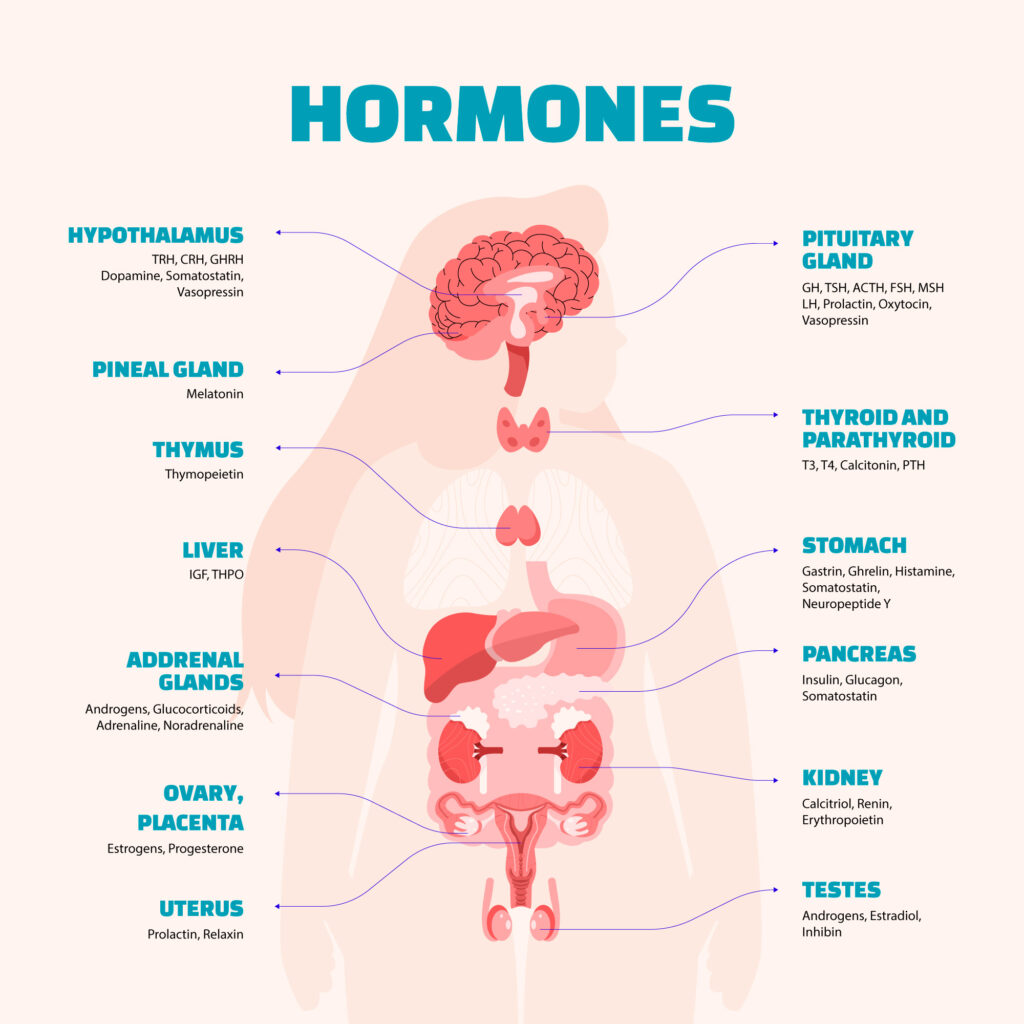
The main source of hormones are endocrine glands. They produce chemicals and release them directly into our bloodstream. The main glands of the endocrine system are:
- Hypothalamus
- Pituitary gland
- Pineal gland
- Thyroid gland
- Parathyroid glands
- Adrenal glands
- Pancreas
- Ovaries
- Testes
Some tissues are not a part of the endocrine system, but they also produce hormones. Examples are adipose tissue (fat tissue), liver, kidneys, gastrointestinal tract and placenta.
Hypothalamus
The hypothalamus is a small part of the brain. It produces hormones that regulate the function of the pituitary gland. Hormones produced by the hypothalamus are:
- Corticotropin-releasing hormone – the main organiser of the stress response of your body.
- Dopamine – the hormone of pleasure and satisfaction, regulates movements and memory.
- Gonadotropin-releasing hormone – causes the pituitary gland to release luteinising hormone (LH) and follicle-stimulating hormone (FSH).
- Growth hormone-releasing hormone – stimulates synthesis and release of growth hormone (somatotropin) in the pituitary gland.
- Oxytocin – synthesised in the hypothalamus and stored in the pituitary gland. Plays a role in reproductive function.
- Somatostatin – inhibits production of other hormones and enzymes.
- Thyrotropin-releasing hormone – stimulates the release of prolactin and thyrotropin-stimulating hormone (TSH) from the pituitary gland.
Pituitary gland or hypophysis
The pituitary gland is a small, bean-sized gland located deep in your brain, just beneath your hypothalamus. This gland is also called the “master gland” because it produces hormones that control nearly the entire endocrine system.
- Adrenocorticotropic hormone, or corticotropin – stimulates the release of cortisol from adrenal glands.
- Follicle-stimulating hormone (FSH) – regulates the menstrual cycle and stimulates the ovaries to produce egg cells.
- Luteinising hormone (LH) – controls the menstrual cycle and promotes the release of an egg from the ovary.
- Growth hormone or somatotropin – promotes a child’s growth, regulates glucose metabolism in adults.
- Prolactin – regulates reproductive function, lactation, and the immune system and influences behaviour.
- Thyroid-stimulating hormone (TSH) – regulates production of thyroid hormones by the thyroid gland.
- Anti-diuretic hormone (ADH) or vasopressin – regulates blood pressure, blood volume and tissue water content.
- Oxytocin – controls key aspects of female reproductive functions.
Pineal gland
The pineal gland is a small gland located deep in the brain, above the thalamus. The main function of this gland is melatonin production. Melatonin is a part of the circadian system and regulates the sleep-wake cycle.
Thyroid gland
The thyroid is a small, butterfly-shaped gland located in the middle of the neck below the Adam’s apple. The main hormones that our thyroid gland produces are:
- Triiodothyronine (T3)
- Thyroxine (T4)
- Calcitonin
T3 and T4 are collectively called “thyroid hormones”. These hormones have plenty of functions. Particularly, they are responsible for tissue metabolism and play a role in regulation of blood pressure and heart rate, digestive function and a child’s brain development. Calcitonin plays a role in bone metabolism and regulates calcium and phosphate levels in the blood.
Parathyroid glands
These glands are small pea-sized structures located behind the thyroid gland; usually there are four of them. These glands release parathyroid hormone (PTH), which regulates blood calcium levels and activates vitamin D.
Adrenal glands
These triangle-shaped pairs of glands are attached at the top of each kidney. They produce these hormones:
- Cortisol – regulates metabolism, immunity and stress response.
- Aldosterone – regulates body salt and water content, impacts blood pressure․
- DHEA and testosterone are weak sex hormones. They play a role in a child’s sex organ development and puberty.
- Adrenaline (epinephrine) and noradrenaline (norepinephrine), also called catecholamines, regulate stress response, increase heart rate, blood pressure and breathing rate, and also dilate pupils.
Pancreas
This organ is a part of the digestive system. The pancreas has two major cell types. One produces digestive enzymes and excretes into the intestine, and other ones (islet cells) produce glucagon and insulin. These hormones regulate blood sugar levels. An insufficient amount of insulin is the main pathogenic mechanism of type 1 diabetes mellitus.
Ovaries
Ovaries are oval-shaped organs located in the pelvic cavity on both sides of the uterus. Ovaries are part of the female reproductive system. The key role of ovaries is to produce and release eggs and sex hormones:
- Oestrogen
- Progesterone
- Testosterone
These hormones are involved in the menstrual cycle and reproduction.
Testes
Testes are two oval-shaped organs located in the pouch of skin (scrotum) behind the penis. Testes are part of the male reproductive system. They produce sperm and testosterone. This hormone is responsible for adult man-specific physical characteristics, sex function, muscle and bone strength.
Sources:
Medscape
Society for endocrinology
Cleveland clinic