
What is a peptic ulcer?
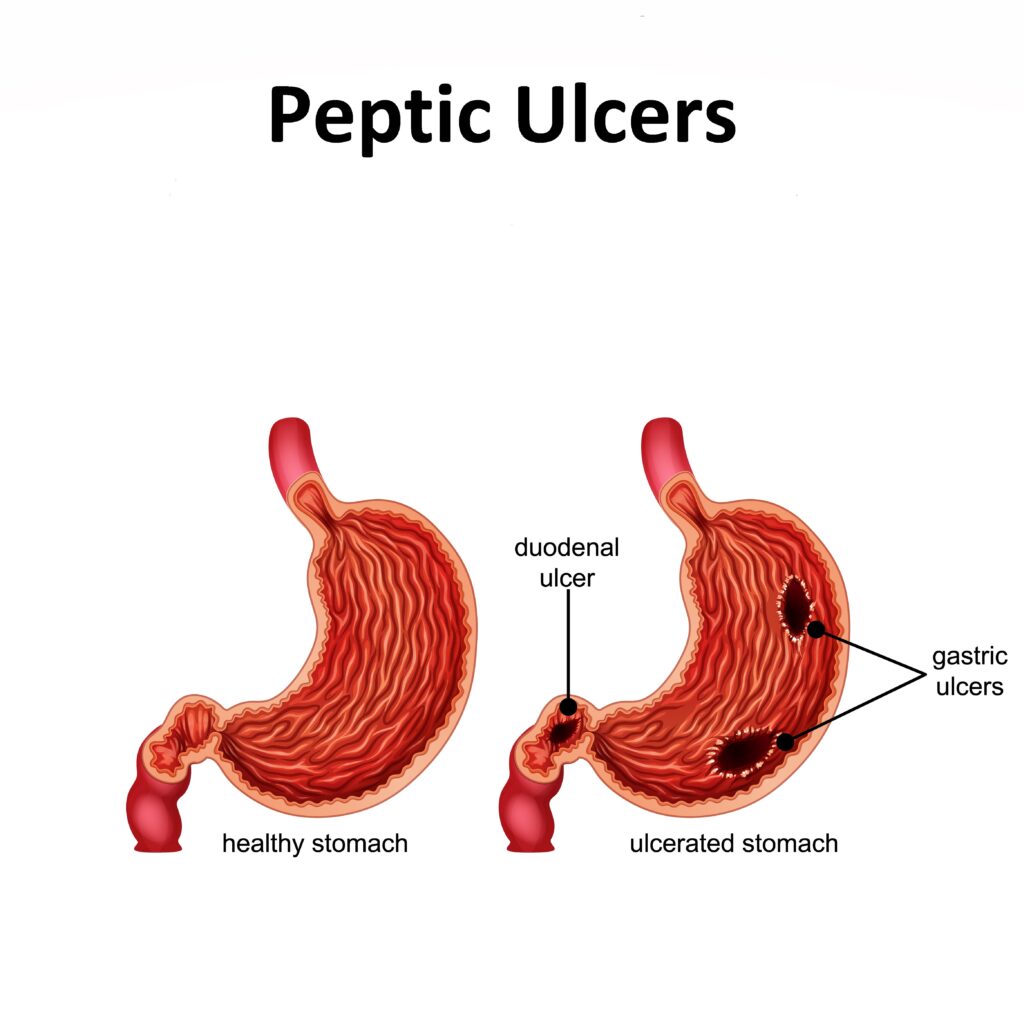
Peptic ulcer disease (PUD) is a condition that causes peptic ulcers. The latter is an open sore on the inner lining of the stomach and upper gastrointestinal (GI) tract.
The GI tract consists of interconnected hollow organs and tubes. It includes the mouth, esophagus, stomach, small intestine, large intestine, and anus. The upper part of the small intestine is called the duodenum. The main function of the GI tract is food digestion. The latter takes place due to digestive enzymes and gastric acid. These substances are highly corrosive. Hence, the stomach and intestines produce mucus to protect the inner lining of these organs (the mucosa) from “digestion.” Peptic ulcers develop when the production of digestive enzymes and acid exceeds that of protective substances.
What types of peptic ulcers are there?
There are two main types of peptic ulcers:
- Gastric ulcers are located in the stomach. They account for almost 20% of peptic ulcers.
- Duodenal ulcers are located in the duodenum. They are more prevalent (about 80% of peptic ulcers are duodenal).
Rarely, peptic ulcers may occur on:
- esophageal lining due to chronic acid reflux (esophageal ulcers), and
- in other parts of the small intestines (e.g., jejunal ulcers)
What are the symptoms of peptic ulcer disease?
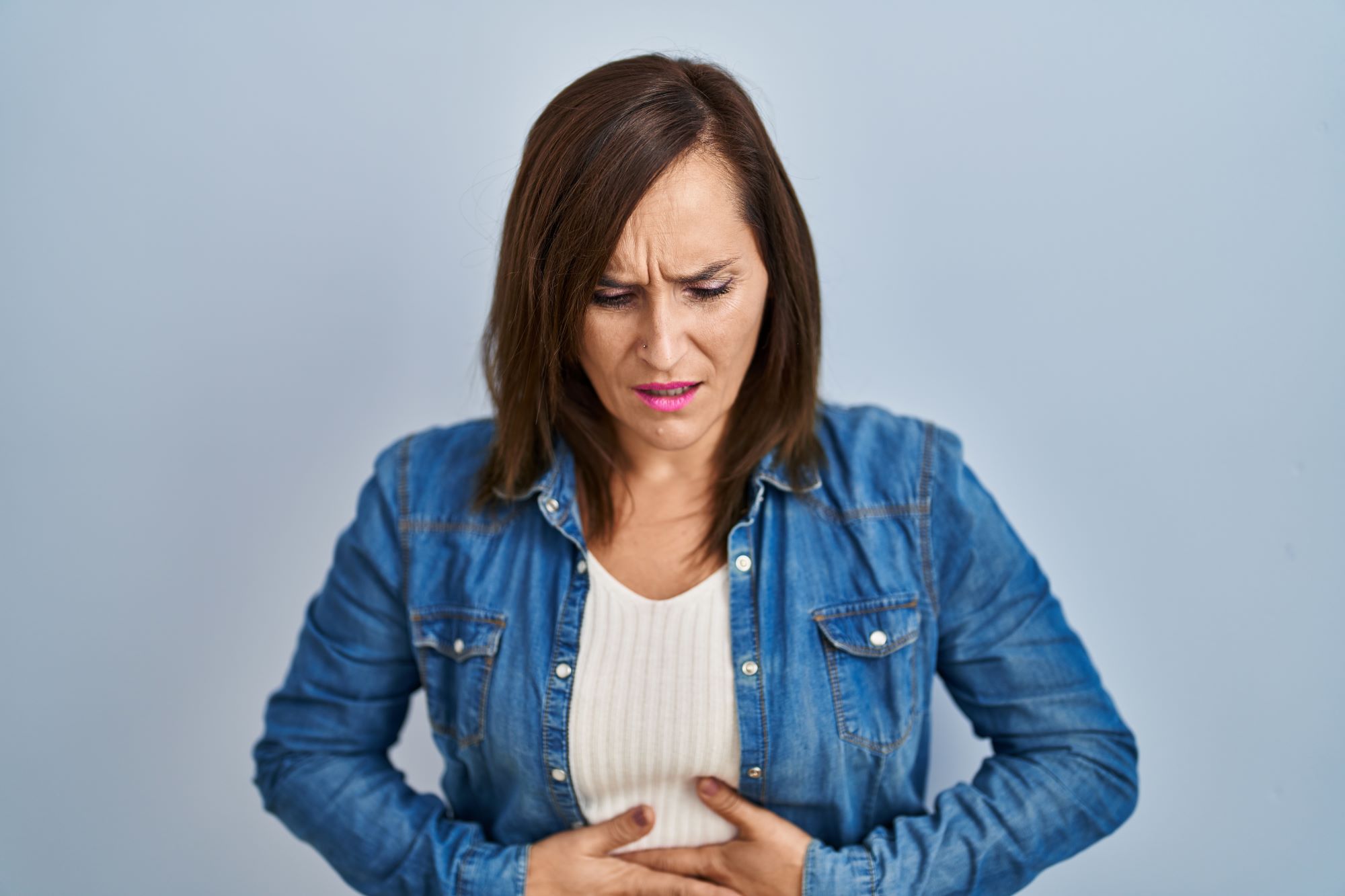
Many people with PUD may not experience any symptoms. Common symptoms may be similar to other upper GI tract diseases (e.g., gastroesophageal reflux disease). Upper abdominal (epigastric) discomfort or pain and indigestion are the most prevalent symptoms. Other signs include:
- Bloating
- Burping
- Heartburn
- Feeling full quickly when eating
- Nausea and vomiting
- Loss of appetite
- Pain radiating to the back
- Burning or gnawing feeling
- Pain aggravated by meals or by hunger
- Pain that wakes you up at night
What causes peptic ulcers?
PUD happens when natural defending mechanisms of the upper GI tract fail to protect against digestive enzymes and stomach acid. In most cases, two factors are responsible for the above-mentioned imbalance:
- Helicobacter pylori. This germ normally lives in the stomach and duodenum. Mostly it’s harmless, but sometimes it causes inflammation that leads to ulcer formation.
- Regular use of NSAIDs. NSAIDs are over-the counter medications that are used to treat pain, fever,-counter and inflammation. This group of drugs includes ibuprofen, aspirin, naproxen sodium, ketoprofen, diclofenac, and others. Acetaminophen is not included. NSAIDs damage gastric and duodenal mucosa by several mechanisms, including topical irritant effect and the inhibition of protective substance synthesis. The risk of ulcer formation is individual and depends on multiple factors. The risk is higher if you take high doses of NSAIDs or two or more NSAIDs or take NSAIDs with certain other medicines (e.g., blood thinners).
Other infrequent causes of PUD are:
- Other GI infections
- Chemotherapy
- Radiation therapy
- Corticosteroid use
- Autoimmune diseases
- Stomach cancer
- Zollinger-Elisson syndrome
- Severe illness or injury
The risk of developing PUD increases if you:
- Are older than 60
- Previously have had peptic ulcers
- Have a family member with peptic ulcers
- Smoke
- Drink alcohol
- Have severe stress
- Eat spicy food
What are the complications of PUD?
If left untreated, PUD could lead to:
- Gastrointestinal perforation (a hole in the wall of the stomach or intestines)
- Gastrointestinal bleeding (blood loss from peptic ulcers)
Symptoms of GI bleeding and perforation include:
- Severe, sharp stomach pain
- Abdominal swelling or tenderness
- Bloody vomiting
- Blood in your stool
- Black stool that looks like tar
- Signs of severe blood loss, like fainting, low blood pressure, and pale skin
When to see a doctor?
Contact your healthcare provider if you have PUD symptoms. Get emergency care if you have the above-mentioned symptoms of complicated PUD.
How are peptic ulcers diagnosed?
As symptoms of PUD could be similar to other gastrointestinal diseases, your doctor may recommend you tests, like upper endoscopy and H. pylori testing.
Upper endoscopy
A small flexible tube with the camera on it’s tip is passed through your mouth to your stomach. Thus, the doctor is able to directly examine your upper GI tract, take tissue samples (biopsy) to check for inflammation, cancer cells, or reveal H. pylori.
H. pylori testing
Anyone with PUD should be tested for this infection and, if present, should be treated. The tests for H. pylori detection could be done by:
- Biopsy
- Stool
- Breath
How is peptic ulcer disease treated?
The treatment depends on the cause of the disease. If H. pylori is responsible for PUD, the treatment plan always consists of at least two antibiotics. Other medications for PUD treatment include:
- Proton pump inhibitors (omeprazole, pantoprazole, lansoprazole)
- H2 blockers (famotodine)
These two groups of drugs suppress gastric acid production.
If you take NSAIDs, your provider may recommend you stop or replace them with other medicines.
Some methods help relieve symptoms, e.g.:
- Stop smoking
- Stop drinking alcohol
- Take antacids
Can I prevent peptic ulcer disease?
Yes, you can prevent developing a peptic ulcer. To reduce the risk, you should:
- Avoid tobacco products (all types, including electronic cigarettes and vapes)
- Avoid alcohol
- Use aspirin and other NSAIDs carefully
- Manage your stress
- Don’t ignore your ulcer symptoms
- Take an adequate amount of water
- Regularly visit your healthcare provider
Sources:
UpToDate
American College of Gastroenterology
Mayo Clinic
Cleveland Clinic
American Academy of Family Physicians